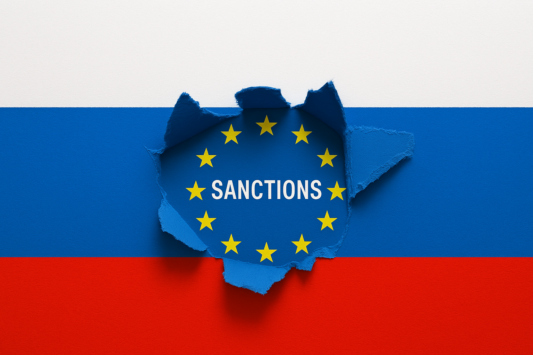

Cumulative protection is a powerful tool that businesses should leverage to protect their marketing, stylistic and industrial innovation effectively.
To achieve its full synergistic effect, however, it is necessary to take account of the features and constraints specific to each of the tools made available by intellectual property law. This requires not only mastering the relevant legal rules, but also understanding the disparities in territorial practices.
The topic is broad and complex and also intersects with copyright law. The purpose here is not to address it exhaustively, but to recall some key fundamentals, particularly within the European Union.
Cumulative protection is primarily intended to optimise protection for the shape of products and/or their packaging. In other cases, it will form part of a strategy aimed, in particular, at fully securing protection for the visual elements used by a company in its communications.
Two approaches may be considered—and can be combined: the first is filing and registering a design. The second is relying on trade mark protection, including, where appropriate, 3D trade marks.

Upstream analysis should be carried out before launching a new product range, to define the most suitable protection strategy, taking into account the conditions for protecting each of its constituent elements.
Key points to consider: trade marks vs designs
Broadly speaking, the elements to consider are as follows:
- Trade marks benefit from protection that is potentially unlimited in time; they must be distinctive and must not be excluded from registration (signs consisting exclusively of the shape, or another characteristic, resulting from the nature of the goods themselves, or necessary to obtain a technical result, or which gives substantial value to the goods). Their scope of protection is limited by the principle of speciality. Beyond a post-registration period (5 years in the EU), enforceability is conditional upon the use made of the mark.
- Designs benefit from time-limited protection (25 years in the EU). They protect the appearance of a product without any principle of speciality and without any requirement of use, provided that they are new and have individual character.
Practical example: a perfume/cosmetics range
Consider the example of a range of perfumes or cosmetic products marketed by a company. The bottle and/or cap may be the same across the entire range, while the word mark or figurative/semi-figurative mark affixed to the label will differ depending on the contents.
Protection by design
Design protection is, in principle, suited to protecting the features of the appearance of the bottle and the cap, separately where justified.
These products must be new and have individual character, which implies, in particular, that they have not been disclosed to the public, or that any post-disclosure grace period has not expired.
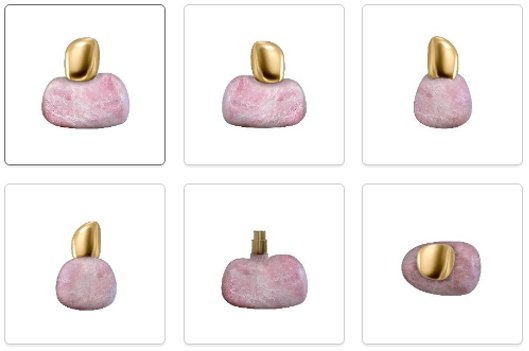
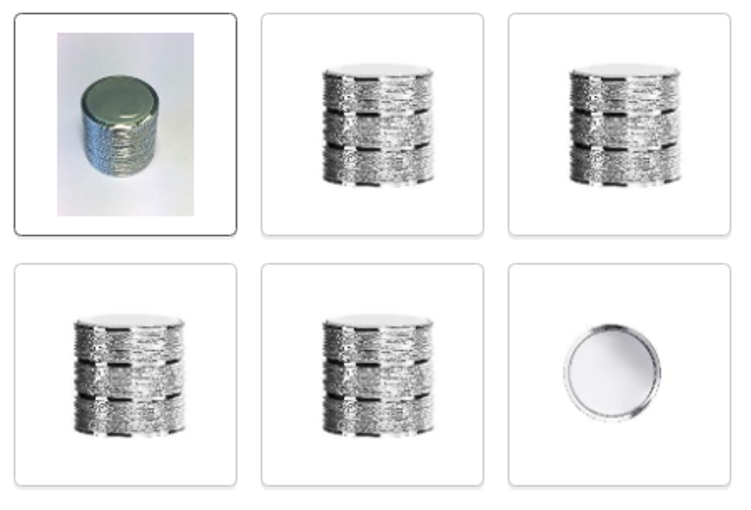
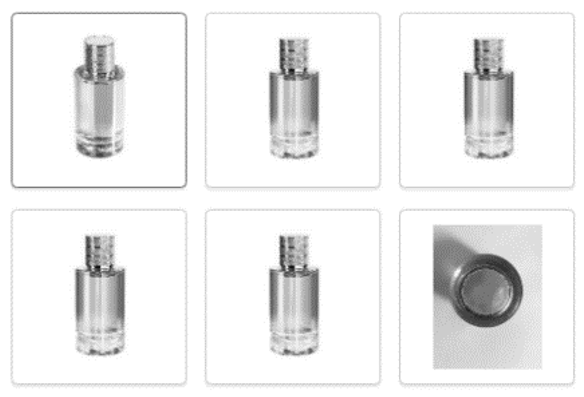
Where design protection is prevented by a lack of novelty, or where the design is about to expire, it may prove useful to seek protection via a 3D trade mark.
Turning to 3D trade marks
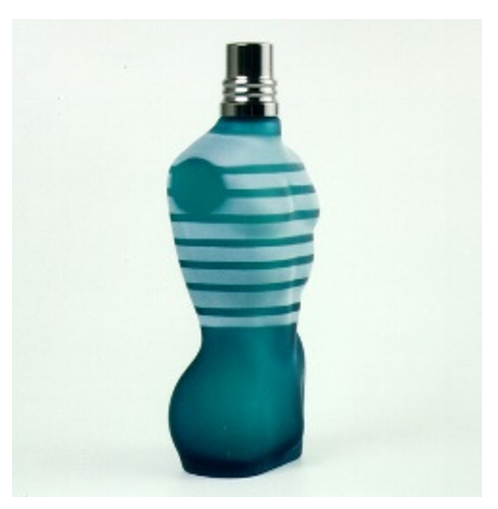
Using a 3D trade mark will first require that the shapes (the bottles and/or caps in our example) are neither necessary to obtain a technical result nor such as to give the product substantial value. In addition, it is necessary for the shapes in question to be distinctive, i.e., capable of distinguishing the designated goods (perfumes or cosmetics) marketed by the trade mark proprietor from those of other undertakings.

Distinctiveness objections and the “norms of the sector” test
Protection via a 3D trade mark may be refused on the ground that the shape constituting the mark does not depart sufficiently from the norms and customs of the sector concerned, so that the relevant public will not perceive the shape shown in the trade mark application as indicating the commercial origin of the designated goods. By way of example, the following mark was partially refused, in particular insofar as it designated jewellery and related goods.
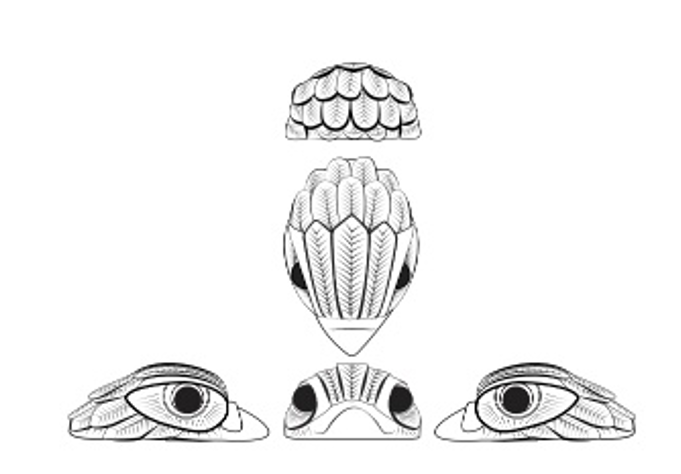
EUTM No. 18833400 – 28/05/2024, R 173/2024-5, SHAPE OF A BEJEWELLED EAGLE HEAD (3D): The sign at issue is merely an aesthetic or decorative variation compared to the shapes of jewellery and jewellery articles commonly present on the market. As a result, the features of the shape at issue will not be memorised by consumers as a distinctive sign. Accordingly, in the absence of any other element, the relevant public will not perceive the shape represented in the trade mark applied for as indicating the commercial origin of the goods concerned.
In the above scenario, one way to anticipate a potential objection based on lack of distinctive character is to determine whether registration can be obtained by demonstrating that the shape constituting the trade mark has acquired distinctive character, for the goods for which registration is sought, through the use that has been made of it.
Acquired distinctiveness as a lever: an illustration
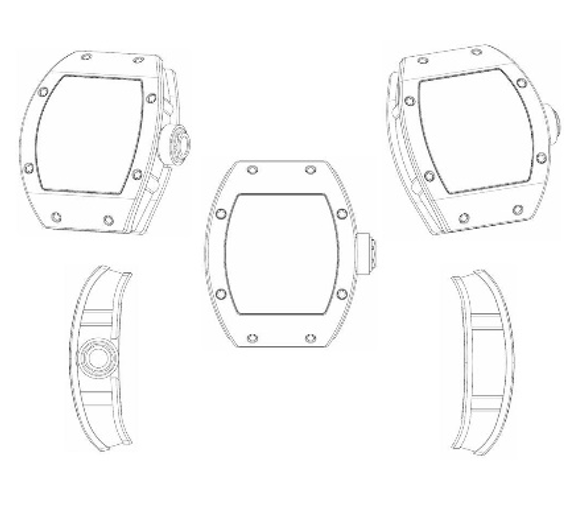
The trade mark reproduced below, designating the goods “horology and chronometric instruments; watches; watch cases”, is a perfect illustration of the implementation of a cumulative protection strategy.
Following a refusal decision issued by the EUIPO for lack of distinctive character, the applicant succeeds—by demonstrating long-standing and substantial use—in persuading the Office that the evidence of use submitted is sufficiently compelling to support a finding of acquired distinctiveness.
Spare parts, the “repair clause”, and the benefit of trade mark protection
Lastly, in a context of liberalisation of the spare parts market—taking the form of an exception to design protection for spare parts used in the repair of complex products (the “repair clause”)—two decisions deserve mention.
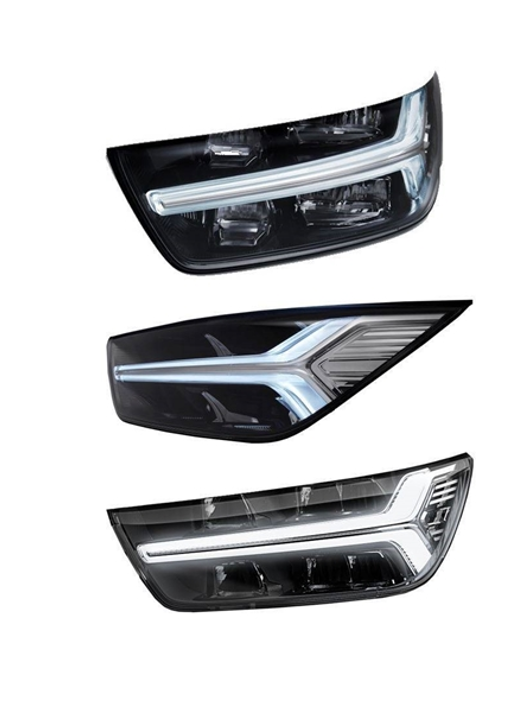
The General Court (Case T-260/23, 26 June 2024) held that the EU trade mark reproduced below, designating vehicle lighting apparatus and other vehicles and means of transport, consists of “headlamps which differ, significantly, from other headlamp shapes usually present on the relevant market. The features making up the headlamps at issue enable the visual individualisation of the applicant’s headlamp and front-car models and enable them to be distinguished from headlamp and car models originating from other manufacturers. Accordingly, the mark applied for, taken as a whole, has the minimum distinctive character required”.
One must appreciate the benefit of cumulative protection for the proprietor in that case. Whereas design protection would have conferred a right limited in time and potentially constrained by the “repair clause”, the proprietor obtains a trade mark right that is virtually unlimited in time over the headlamp shape that is its subject matter.
The Court of Justice of the European Union (Case C-334/22, 25 January 2024) also held that “a third party who, without the consent of the motor vehicle manufacturer that is the proprietor of an EU trade mark (*), imports and offers for sale spare parts—namely radiator grilles for those motor vehicles—containing an element designed for the attachment of the emblem representing that trade mark and the shape of which is identical or similar to that trade mark, uses a sign in the course of trade in a manner that is liable to adversely affect one or more of the functions of that trade mark.
The above-mentioned “repair clause” “does not preclude the motor vehicle manufacturer that is the proprietor of an EU trade mark from prohibiting a third party’s use of a sign identical or similar to that trade mark for spare parts for those motor vehicles—namely radiator grilles—where that sign consists of the shape of an element of the radiator grille designed for the attachment of the emblem representing that trade mark, regardless of whether or not it is technically possible to attach that emblem to that radiator grille without affixing that sign to it”.
The “repair clause”, which limits the rights conferred by design legislation, therefore cannot apply to the detriment of trade mark rights held by the same proprietor. Here again, the articulation and cumulation of protections based on design law and trade mark law produces a synergistic effect for the benefit of the proprietor.
Conclusion
Combining shape, position and motion marks with designs—whose definition now encompasses movement, transitions or any other type of animation—opens the door to new strategies for protecting companies’ marketing, aesthetic and industrial innovation.
January 2026
Contributing author

Jean-Baptiste Duranton
European Trademark & Design Attorney



January 2026